
Cage Systems
Poultry cage systems are a poultry farming method in which chickens are raised in specially designed cages. In this system, chickens are placed in cages in a certain area and fed automatically. This method helps to increase production efficiency while optimizing the use of space.
LAYER CAGE

Egg crates are efficiency and hygiene-focused systems for housing laying hens in industrial production. Their key feature is a sloping floor to keep eggs clean and facilitate easy collection. All processes, including feeding, watering, manure removal, egg collection, ventilation, and cooling, are fully automated.
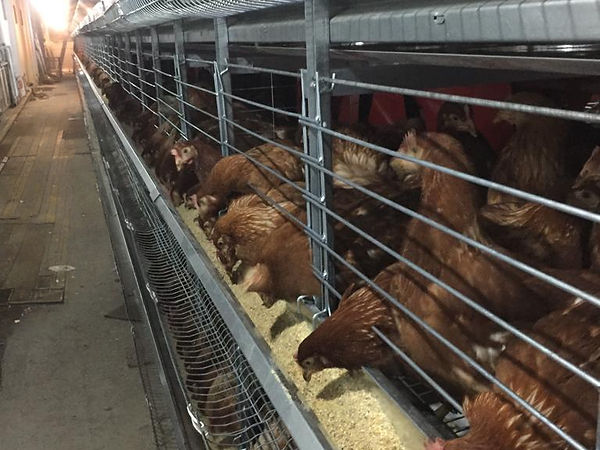
Feeding system options include chain or trolley type. Egg collection system options include elevator or waterfall type.

The cage system's promise is clear: maximum production in minimum space. In this engineering marvel, where every square centimeter is accounted for, there is no room for feed waste. Every drop of water flowing from the nipple drinkers is not wasted.

The conveyor belts that silently slide beneath each tier virtually eliminate the risk of disease, while the eggs laid on the sloping floors reach the collection table untouched and spotless. This is the pinnacle of food safety and efficiency. Labor costs decrease, and production figures increase. The numbers don't lie; the cage is one of the most efficient bastions of industrial production.

In the waterfall-type egg collection system, eggs from each level are simultaneously transferred to the waterfall system at the front, and from there to the egg conveyor.

Egg conveyors help ensure the safe journey of eggs collected from the cages to the egg-laying room.

Egg crates are equipment used in industrial egg production, where chickens are housed in multi-story systems. Ventilation, cooling, feeding, manure removal, egg collection, and lighting are automatically managed by a poultry house control panel. The work involved is primarily about control, counting, and monitoring.
